The first time you order coffee in Italy, the room seems to run on rules nobody has explained. People are standing, drinking from small cups, paying at a till across the room, talking over one another. It can feel like a private club. It isn’t. An Italian bar — the word means café, not cocktail lounge — is one of the most forgiving places in the country, and the whole system fits on a single page. Learn five words and one habit, and you can walk into any bar from Turin to Lecce and order like you have done it for years.
Head for the counter, not a table
Walk in and watch for two seconds. You are looking for the till (cassa) and the espresso machine. In many bars you pay first at the cassa, then hand the paper receipt to the barista and say what you want. In others — especially places with table service or a single counter — you order first and pay when you leave. There is no national rule, so a glance at the queue tells you everything: if people are lining up at the register before they get their coffee, follow them.
Don’t hover by the door. Move to the counter, leave a little space, and catch the barista’s eye. In a busy morning bar the person behind the machine is holding four orders in their head at once, so a raised finger and “un caffè, per favore” is all you need. Nobody is judging your accent. They are judging the queue.
Drinking at the counter is not the second-class option. It is the point. Locals drink standing, in ninety seconds, and leave.
What “a coffee” actually means
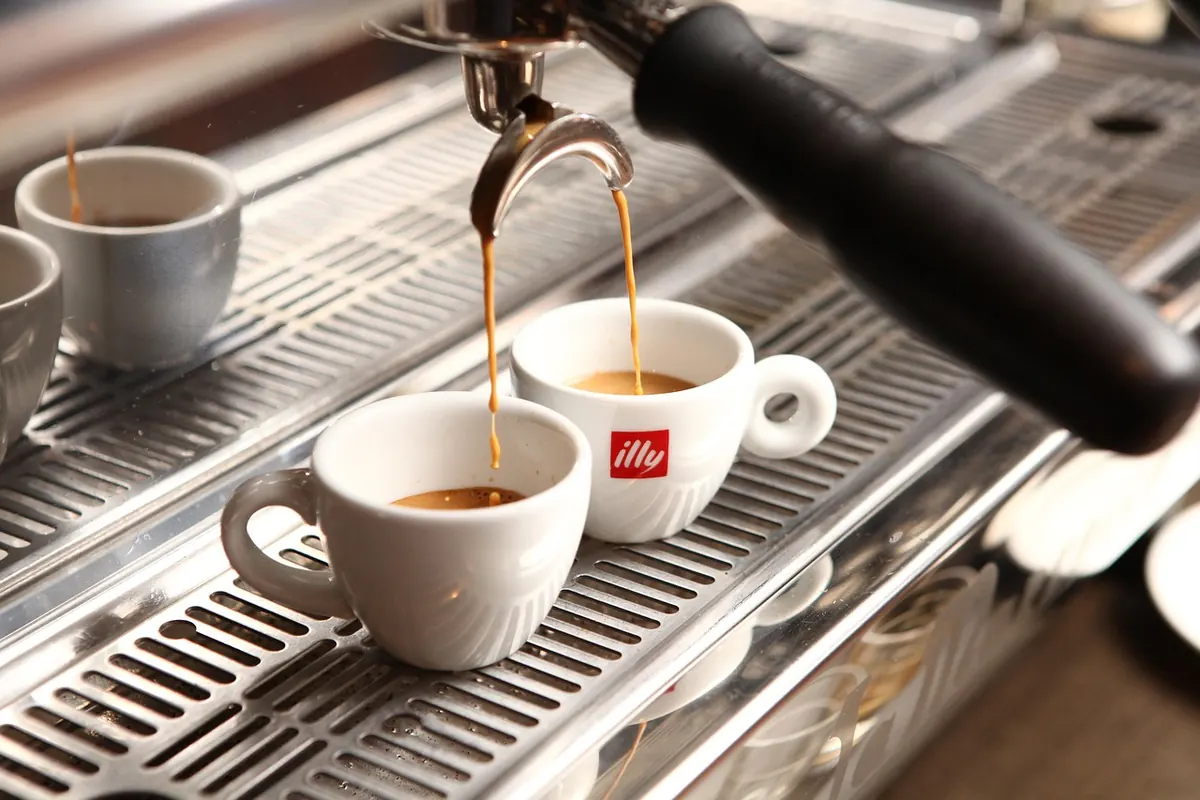
What most of the world calls an espresso is simply un caffè here. Ask for an espresso and you will get one, but the shorter phrase is what people actually say. The cup is small, thick-walled and warmed at the machine. It arrives with crema on top, a tiny spoon, and sometimes a small glass of water. Nobody adds milk. Nobody asks for a bigger cup.
The variations worth knowing:
- Caffè — the default. One shot, one small cup, drunk on the spot.
- Ristretto — the same shot pulled short: less water, more concentrated, a touch sweeter on the finish.
- Lungo — pulled long, so more water and a bit more bitterness. An americano is longer still, usually a shot with hot water added.
- Doppio — two shots in one cup. Order this if you want something closer to a full mug.
- Macchiato — espresso “stained” with a spoonful of milk. Ask for a caffè macchiato, not a plain macchiato, which can mean other things in other countries.
- Corretto — “corrected” with a splash of grappa or sambuca. A northern mid-morning tradition, and stronger than you expect.
- Decaffeinato — decaf, often shortened to dec. Perfectly good in most bars.
Milk drinks and the famous clock
Here is the worry most visitors bring through the door: the cappuccino clock. The shorthand is that Italians drink milk-heavy coffee before eleven in the morning and switch to espresso afterwards, especially after a meal. It is a habit, not a law. No barista will refuse you, and in cities full of visitors nobody blinks.
Still, you will notice the pattern — cappuccini all round at breakfast, and by four in the afternoon the machine is producing nothing but espresso. If you want to follow the custom without thinking about it: milk in the morning, black coffee after lunch. If you genuinely want a cappuccino at four, order it and enjoy it. The worst that happens is a very slight, very polite look.
The vocabulary is where people trip up. Latte means milk; asking for “un latte” will get you a glass of milk. Caffellatte is a big cup of coffee with hot milk, a breakfast order. Latte macchiato is mostly steamed milk marked with espresso, served tall. A proper cappuccino has a modest cap of foam, not a mountain. And if you find yourself in Piedmont or Lombardy, try a marocchino — espresso, cocoa and milk foam in a small glass.
Standing or sitting: two different prices
Prices can differ between the counter (banco) and a table (tavolo). The reason is service: someone brings the coffee, clears the table, washes an extra cup. In a neighbourhood bar the gap is small. On a famous piazza it can be startling, and it is not a scam — it is printed on the price list every bar is expected to display. Glance at that list before you sit down at a table with a view.
You may also see servizio, a table service charge, and in restaurants coperto, a per-person cover charge for bread and setting. Both are normal. In a station bar at seven in the morning, stand. On a quiet terrace with a view, sit and pay for the view. Neither choice marks you as a tourist.
Paying without a hitch
The sequence varies, but the most common version goes like this:
- Find the cassa and join the right queue — usually the one at the register, not the one at the machine.
- Say what you want: “Un caffè e un cornetto, per favore.”
- Pay and take the receipt (scontrino).
- Hand the receipt to the barista and repeat your order if needed.
- Drink at the counter, then leave. Some bars collect cups, most don’t care.
- If you sat at a table, you usually pay at the end — catch someone’s eye rather than heading to the till unannounced.
Cards are widely accepted, though a tiny bar or a kiosk may still prefer cash for a single coffee, so keep a few coins and a small note on you. Keep the receipt until you have your cup; it is your proof of payment if there is any confusion. If you need a proper invoice for business expenses, ask the bar directly — the details of receipts and local rules vary, so get it sorted at the counter rather than later.
Tipping and the small courtesies
You do not need to tip fifteen percent. In a bar, tipping is rounding up: leave the coins from your change, or a euro if you had a table and were looked after. In restaurants, service may already be included, in which case a few euros on top is a courtesy rather than an obligation.
Two habits go further than money. Say buongiorno when you walk in and grazie when you leave — skipping the greeting reads as cold, not efficient. And drink your coffee where you ordered it instead of carrying it down the street. Takeaway exists (ask for da portare via), but the culture is to stand, sip, and go.
Five phrases to have ready
- Un caffè, per favore. — One espresso, please.
- Un caffè macchiato. — Espresso with a dash of milk.
- Un cappuccino e un cornetto. — The standard breakfast.
- Dov’è la cassa? — Where is the till?
- Da portare via. — To take away.
That is the whole system: order at the counter, keep the cup small, keep the milk for the morning, pay at the till, and round up the change. Get those four moves right and the rest — the accent, the pastry you can’t pronounce, the barista who remembers your order by the third day — takes care of itself.
Photo: eliasfalla / Pixabay