A moka pot and a French press can both make excellent coffee, but they ask for different things. One wants a burner, a steady hand, and a few minutes of attention. The other wants coarse grounds, a kettle, and enough vertical clearance to press the plunger. In a small kitchen, those differences matter as much as flavor. If your counter is also your prep space and your drying rack, the “best” brewer is the one you will actually use, clean, and store without resentment.
This comparison looks at the four things that decide that relationship: what lands in the cup, what happens at the sink, how much room the brewer takes, and what it costs to keep it going. There is no universal winner. There is a better fit for your morning, your storage, and the kind of coffee you reach for first.
Flavor First: What Lands in the Cup
The moka pot and French press produce different styles of coffee. Neither is automatically better. The moka pot makes a small, concentrated brew with a syrupy body and a sharp, sometimes bittersweet finish. The French press makes a fuller, rounder pot with more oils in suspension and a little sediment at the bottom. If you like coffee that stands up to milk, the moka pot is a natural choice. If you like a larger mug that you can sip slowly, the French press is easier to live with.
Moka Pot: Strong, Concentrated, Unforgiving
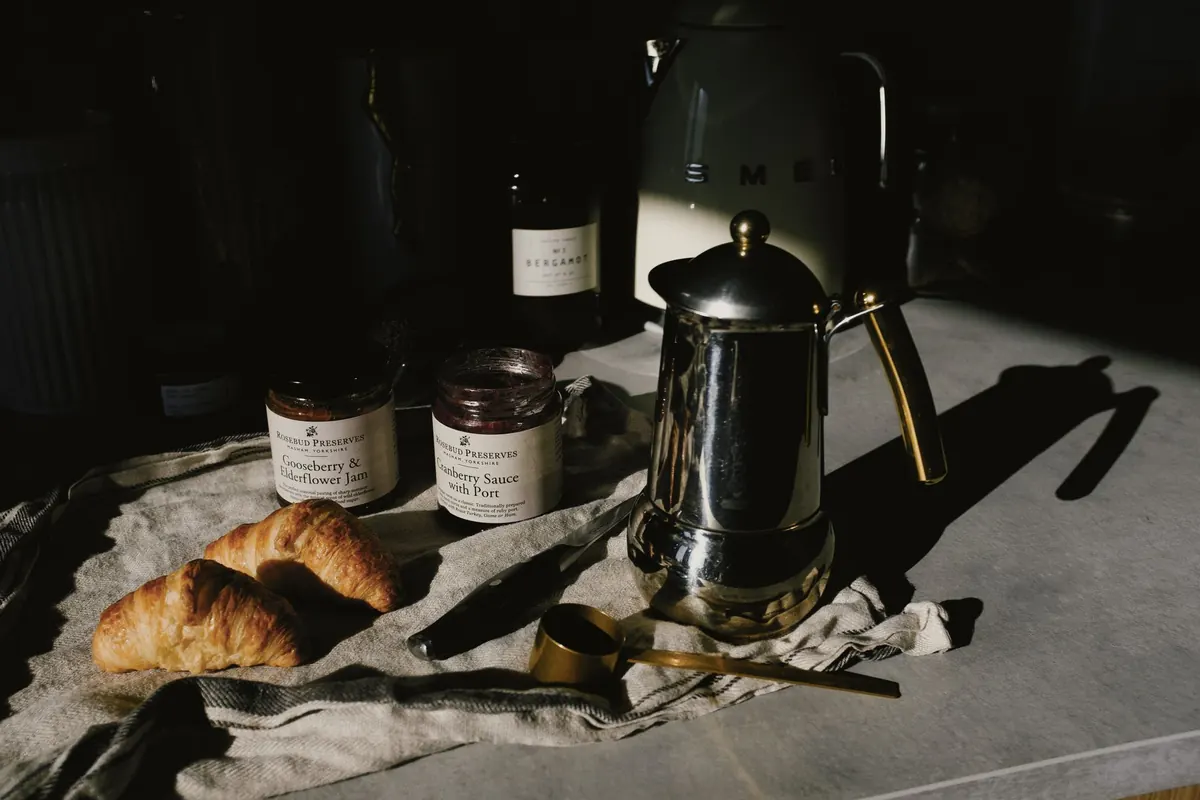
A moka pot uses steam pressure to push hot water up through a bed of coffee. The result is closer to a strong filter concentrate than to espresso, but it has enough intensity to make a small cappuccino or a decent Americano. The moka pot rewards a medium-fine grind, a level basket, and gentle heat. It punishes high heat and stale coffee. If the burner is too hot, the coffee can sputter out early and taste harsh or metallic. If the grind is too fine, the pot can struggle and the brew turns muddy.
The practical routine matters. Fill the base with water to just below the safety valve. Add coffee to the basket without tamping it. Screw the top on firmly. Put the pot on medium-low heat and leave the lid open if you want to watch the flow. When the coffee starts to pale and hiss, take it off the heat. That last step prevents the bitter tail end of the brew from ending up in your cup. A moka pot makes a small volume, so it suits one or two people who drink short, strong cups. If you want a big morning mug, you will be diluting it with hot water anyway.
French Press: Round, Oily, a Little Sedimenty
A French press steeps coffee in hot water and then filters it through a metal mesh. Because the coffee spends all its time in contact with water, the cup tends to feel heavier and softer than a pour-over. You get more oils and more fine particles. Some drinkers love that texture. Others find the last sip gritty. A coarse grind helps, and so does a slow plunge. If you press hard and fast, more sediment slips past the mesh.
A simple French press routine works well: use about 15 to 17 grams of coffee for every 250 grams of water, give it a gentle stir after adding the water, and let it steep for about four minutes. Break the crust on top, skim off the foam and floating grounds if you like, then press slowly. Pour all the coffee out rather than leaving it in the carafe, because it keeps extracting and turns bitter. The French press is forgiving on grind size and heat, which makes it a friendly brewer for someone who does not want to fuss.
Grind and Dose Matter More Than the Device
You can ruin good coffee in either brewer. A moka pot with a coarse, uneven grind will taste thin and sour. A French press with dusty fines will taste muddy. Fresh coffee, a consistent grind, and a scale do more for flavor than switching devices. If you already own a decent grinder, both brewers become more useful. If you buy pre-ground coffee, choose a moka-friendly medium-fine grind for the stovetop and a coarse grind for the press. Do not try to use one bag for both unless you are willing to accept compromise.
Cleanup: The Five-Minute Test
The French press is usually quicker to clean. Dump the grounds into the bin, not the sink, because wet grounds can clog a drain. Rinse the carafe, pull apart the filter, and wash the mesh with a soft brush. A little coffee oil remains on the metal and glass, so a warm soak with a small amount of baking soda helps now and then. The glass carafe is the fragile part. It can chip at the rim or crack in the sink, especially if it is knocked against the tap.
The moka pot has more parts: base, basket, top chamber, gasket, and filter plate. Let it cool before opening it, then rinse each piece and dry it well. Do not leave water sitting in an aluminum pot. The gasket needs occasional replacement when it hardens or cracks, and the filter plate should be checked for clogged holes. A mild soap and a soft brush are enough for regular cleaning. Avoid harsh abrasives on aluminum. The moka pot is not difficult to clean, but it is a small assembly, and that matters at 6:30 in the morning when you are already late.
Counter Space, Storage, and Small-Kitchen Reality
The moka pot wins on storage. A two- or three-cup model can live in a drawer, on a narrow shelf, or beside the stove without taking up much room. It needs a burner, though, and it needs to be compatible with that burner. Aluminum moka pots do not work on induction hobs; stainless steel models or an induction adapter do. If your stove is crowded with a kettle and a pan, the moka pot still demands a free ring.
The French press takes up less stovetop space because it does not use the stove at all. It does need counter space for the carafe, a kettle nearby, and enough vertical clearance to press the plunger. In a kitchen with low upper cabinets, that last point is easy to miss. The carafe is tall and glass, so it is not the friendliest thing to store in a crowded cupboard. It also needs a safe spot where it will not be knocked over while the coffee steeps.
For a tiny kitchen, the honest split is this: the moka pot is easier to put away; the French press is easier to set up if you already have a kettle and a free patch of counter. If you have no free counter at all, the moka pot may be the more realistic choice. If you have counter but no spare burner, the press makes more sense.
Everyday Cost and Long-Term Maintenance
Both brewers are among the lower-cost ways to make coffee at home, especially compared with machines that use pods or require frequent repairs. The moka pot usually has a low entry cost and no paper filters. Its ongoing costs are modest: a replacement gasket now and then, and perhaps a new filter plate over time. The French press also avoids paper filters, though some people use a paper filter on top of the mesh to reduce sediment. Its main long-term risk is breakage. A replacement carafe can cost more than expected, and a dropped press ends the conversation.
Coffee dose is the quieter cost. A moka pot brews a small amount, so it is easy to use less coffee per session. A French press encourages a larger batch, which is convenient for two people but can lead to wasted coffee if you make a full carafe and drink only half. Energy use is not a major factor in either case. The moka pot heats on the stove; the French press relies on a kettle. The bigger everyday cost is the coffee itself, followed by the small maintenance parts you replace over the years.
Which Brewer Fits Your Morning?
Choose by habit, not by reputation. The brewer that fits your routine will get used; the one that looks good but adds steps will sit in the cupboard. Use this quick list as a practical filter:
- Choose a moka pot if you drink short, strong cups, like milk-based drinks, have a free burner, and want a brewer that stores in a small space.
- Choose a French press if you drink larger mugs, often brew for two, prefer a rounder texture, and have counter space plus a kettle.
- Choose the moka pot if your kitchen has almost no counter room and you are willing to watch the heat.
- Choose the French press if you dislike fiddly parts and want a brew method you can largely walk away from.
- Choose either one if you already have a good grinder and fresh coffee. The grinder will improve your cup more than a switch between these two brewers.
A Practical Closing for Tight Kitchens
Start with the brewer that matches the cup you actually drink. If you want a concentrated shot to dilute or pair with milk, the moka pot earns its small footprint. If you want a relaxed pot for a large mug, the French press is the easier daily companion. Keep the routine short: a level scoop, a timer, and a place to put the hot parts without crowding the sink. Store the brewer where you can reach it without moving three other things. In a small kitchen, convenience is not a luxury. It is the reason the coffee gets made at all.
Photo: ready made / Pexels